
Win more sponsorship deals. Prove every dollar of value.
EngageRM brings every prospect, proposal, and partner deliverable into one place so your commercial team can close faster and retain longer.
Sponsorship pipelines managed in spreadsheets. Proposals going dark. Renewals missed.
Most commercial teams are running three or four tools, a spreadsheet for the pipeline, email threads for proposals, a shared drive for assets, and a calendar reminder for renewals. When key staff leave, institutional knowledge walks out the door. When a partner asks "what have we delivered?", the honest answer is often "we're not sure."
The result: slower close rates, avoidable churn, and leadership asking for a pipeline report that takes a day to compile.
74% of commercial teams in sport still rely on spreadsheets as their primary sponsorship tracking tool. Research insight, 2025.
Average partner renewal rate before EngageRM: 58%. After: 81%. Composite across 40 clubs.
Commercial directors spend 6-8 hours per week manually compiling reports that EngageRM generates in under 30 seconds.
HOW ENGAGERM SOLVES IT
One platform. Every deal stage, asset, and deliverable in view.
EngageRM's Partnerships & Sponsorship module is built on Microsoft Dynamics 365, giving you an enterprise-grade pipeline that fits the way sport commercial teams actually work.
Drag-and-drop Kanban stages from first contact to signed contract. See every deal's status at a glance without building a report.
Attach proposals, media assets, and inventory items directly to each opportunity. Automated reminders fire when deliverables are overdue.
Set renewal triggers at 90, 60, and 30 days. Personalized outreach sequences launch automatically so no partner renewal slips through.
Live pipeline value, close-rate trends, and partner satisfaction scores, all in a board-ready format, always current.
Unused premium inventory is automatically surfaced to the right prospect segments, turning unsold assets into incremental revenue.
Outlook emails, Teams calls, and SharePoint documents log automatically against each partner record. Zero double-entry.
FulfillRM triggers membership packs and merchandise orders straight from the CRM and tracks every delivery through to the right fan without leaving the platform.
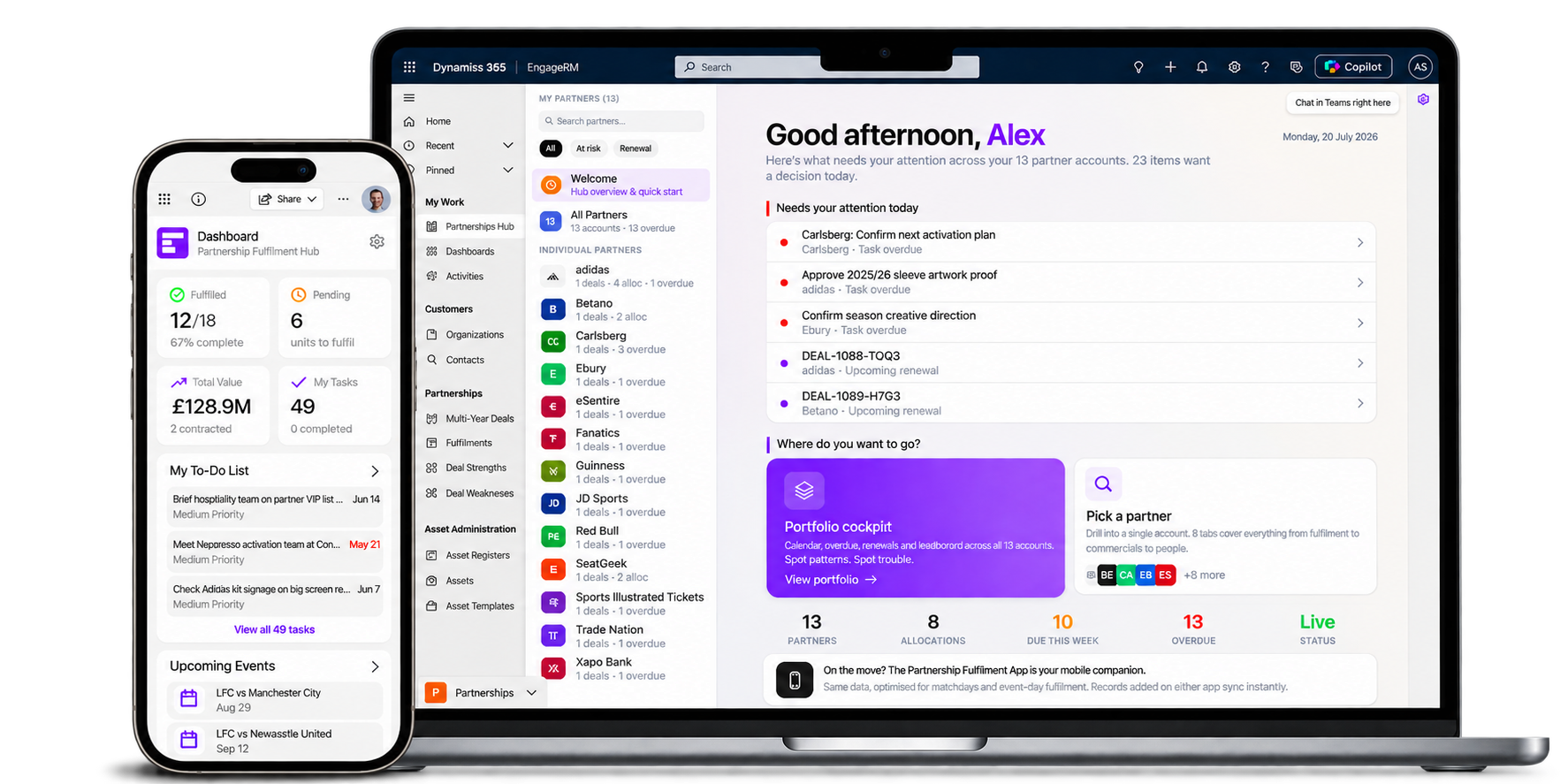
















































Built for commercial directors and partnership managers
Whether you're a Head of Commercial leading a team of five or a solo partnerships manager running a full club portfolio, EngageRM scales to your workload. The same platform serves League Two clubs and Premier League operations.
- No CRM experience required. Guided onboarding with a specialist implementation team
- Works alongside existing ticketing and finance systems
- Role-based dashboards: CEOs see the pipeline, execs see their tasks
We love working with the team at EngageRM. We've had a long-held ambition to align our sales process and to be able to report in real time on exactly where we are. EngageRM has helped us to do this, and we've learned so much from the team along the way.

Andres Alvarez
Head of Sales
,
Australian Open
+23pp
Renewal rate lift
8 wks
Time to live
$1.2M
Added pipeline Y1
FAQs
Frequently asked questions
